One system, built around the polyhouse
Three parts work together: a sensor node that watches for pests and disease symptoms, a dashboard that reads the pattern, and an alert that reaches you before damage spreads.
The hardware, at a glance
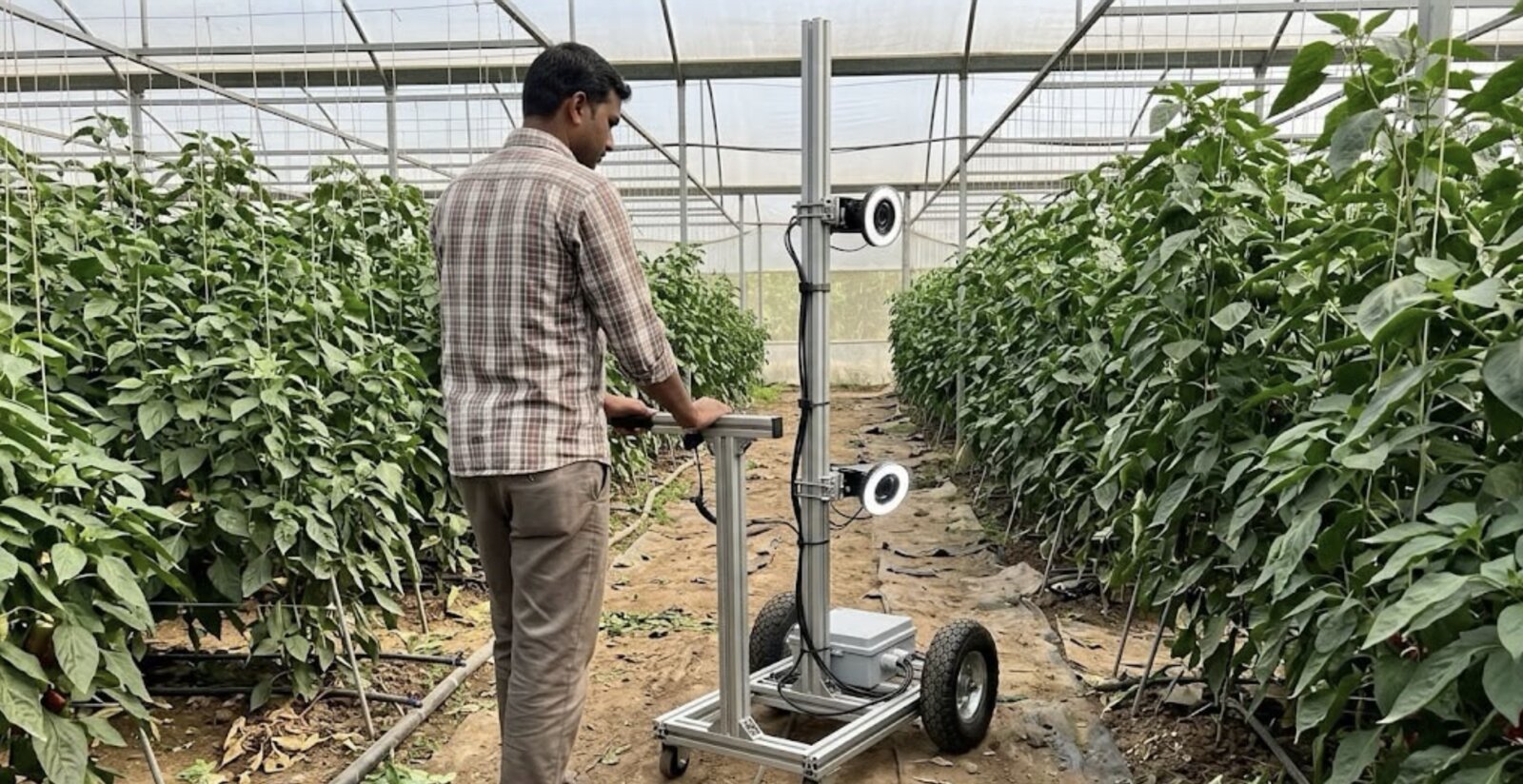
Our working field prototype — a wheeled, pole-mounted cart with dual ring-light cameras, tested in a live polyhouse.
The SoilBotix trap node
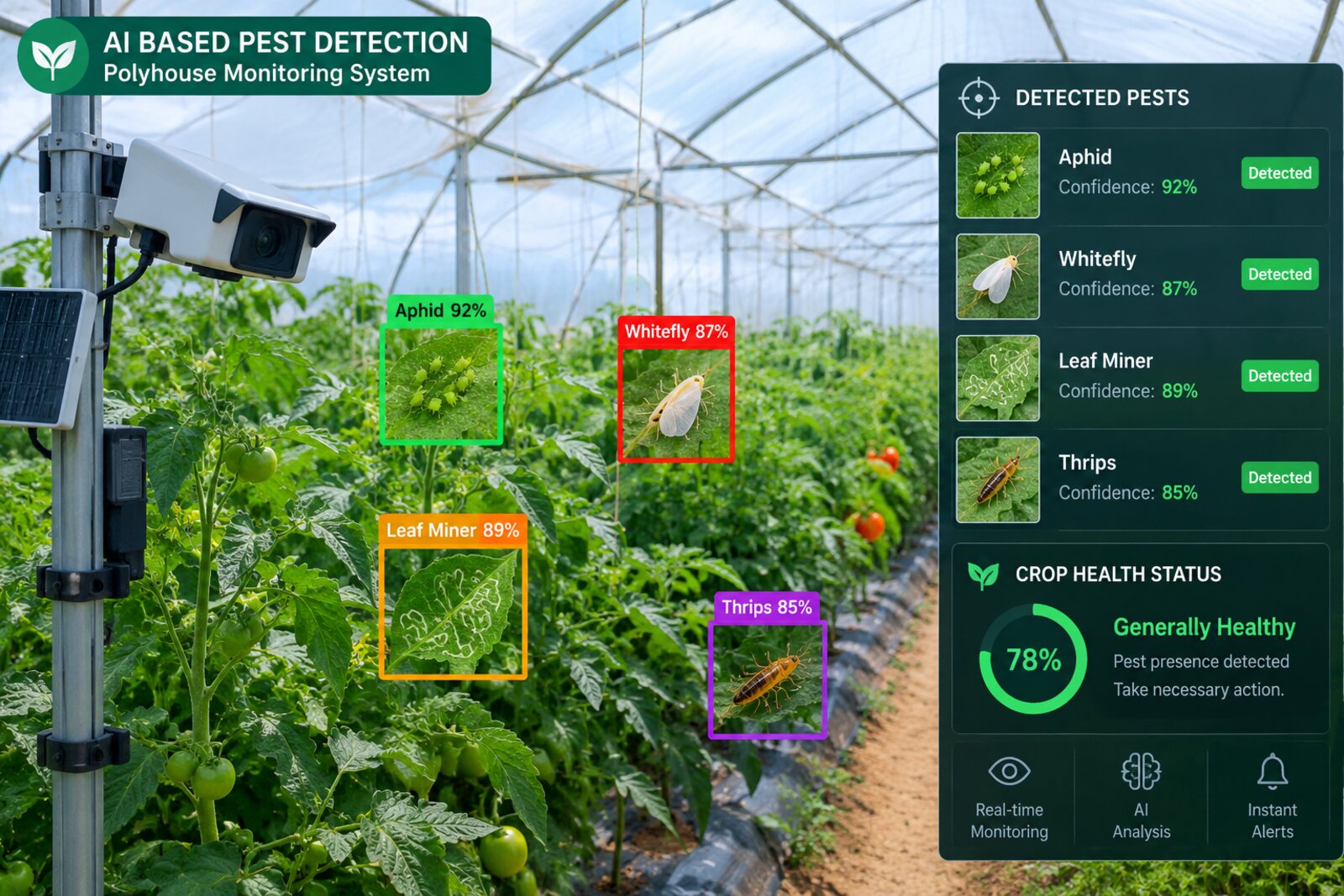
A weatherproof camera unit pairs with a species-specific pheromone lure inside your polyhouse. It photographs the trap area and nearby leaves on a set schedule, runs pest and disease identification on-device, and reports what it finds — not a stream of raw images.
Solar-charged and built to handle polyhouse heat and humidity, one node typically covers a single zone or bay.
Placeholder diagram — real product photos coming soon.
The grower dashboard
Every node's readings land in one view: pest counts by zone, trend lines over the season, and a risk score that accounts for your polyhouse's temperature and humidity.
Built to be read in under a minute — a traffic-light risk indicator per zone, not a wall of charts.
Alerts that reach the field
SMS and WhatsApp alerts in your preferred language the moment a risk threshold is crossed — naming the pest, the zone, and a suggested next step, so your team can act the same day.
Who we're building this for
Individual polyhouse growers
Protected cultivation of tomato, capsicum, and cucumber — where pest build-up is fast and losses hit margins directly.
Farmer Producer Organizations
One shared sensor network across member clusters, with a group dashboard for the FPO's agronomy team.
Polyhouse input & service companies
Add pest intelligence to your existing grower relationship through a white-labeled dashboard.
Ready to see it on your polyhouse?
Early pilot slots are open for growers in Rajasthan.
Book a pilot